How Text-to-Speech Helps Students Learn Better in 2026
How does text-to-speech help students comprehend more?
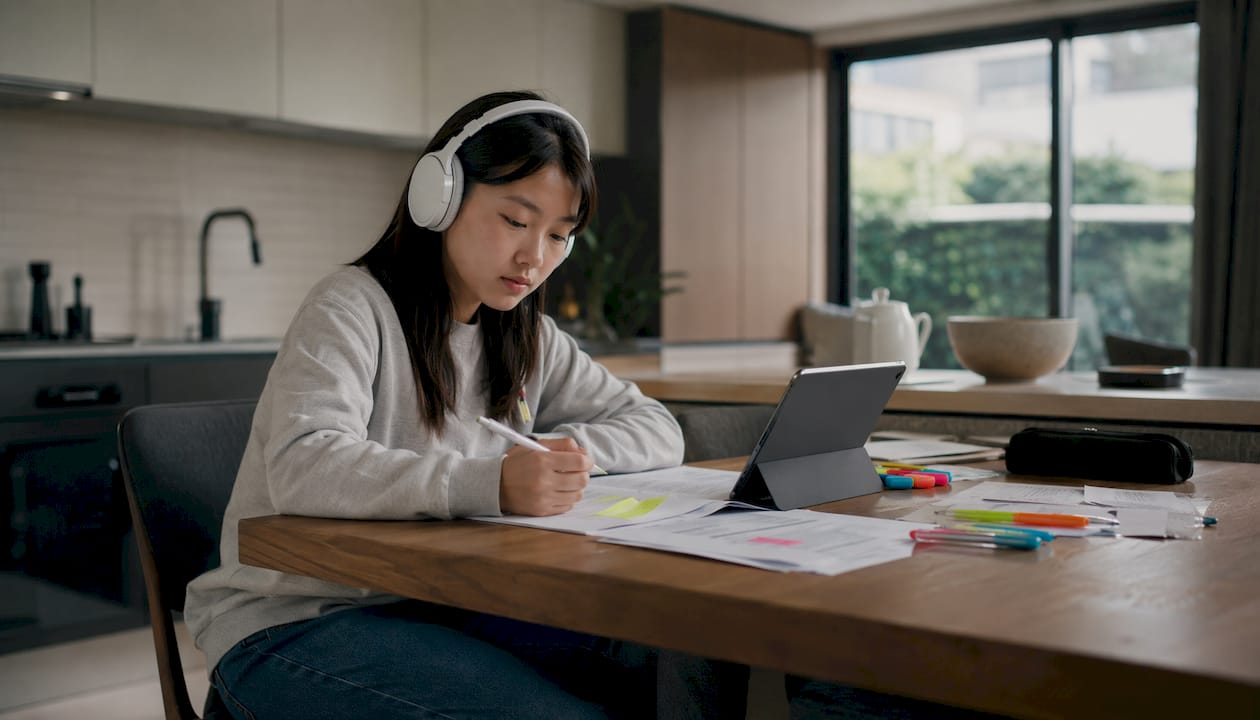
Text-to-speech (TTS) technology converts written text into spoken audio, and for students, that shift from reading to listening can change everything. When you’re not spending mental energy sounding out words, you can actually focus on understanding what they mean.
Here’s what TTS does for you as a student:
- Removes decoding barriers so students with reading disabilities can focus on comprehension instead of struggling with individual words
- Supports sustained attention for students with ADHD by providing auditory guidance that keeps the mind anchored to the text
- Creates a multisensory experience by combining visual and audio input, which boosts retention and focus
- Reduces cognitive overload when reading dense academic material or content in a second language
- Enables flexible, independent study during commutes, workouts, or any time your eyes need a break
TTS works best as a tool layered on top of your existing study habits, not as a replacement for them.
What does the research actually say about TTS benefits?
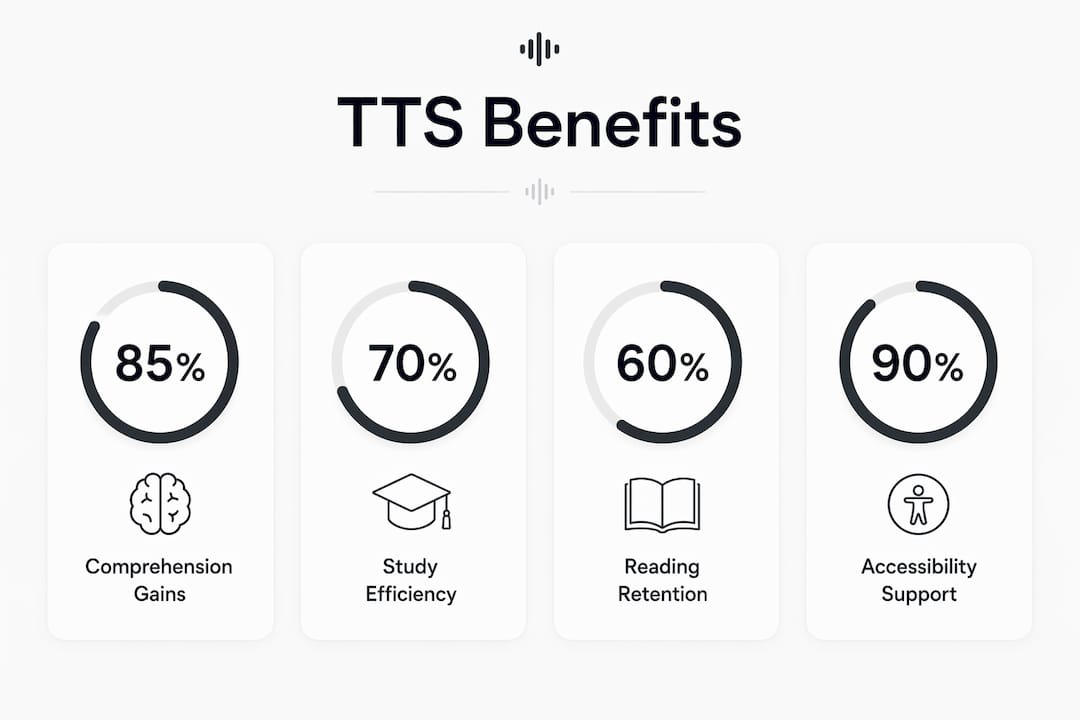
The evidence is solid. A meta-analysis on TTS found an average weighted effect size of d̄ = .35 for reading comprehension gains among students with reading disabilities. That’s a meaningful, statistically significant result across dozens of studies.
But the picture gets more nuanced when you look at different student profiles:
- Students with ADHD see the strongest comprehension gains. TTS acts as external auditory guidance, slowing reading pace and promoting more focused, sustained attention rather than surface-level skimming
- Students with dyslexia benefit differently. TTS reduces total reading time and cognitive effort while maintaining comprehension comparable to silent reading, even when it doesn’t raise comprehension scores
- Typically developing readers often see no benefit and may actually experience disrupted comprehension, since TTS interrupts their natural, fluent reading patterns
- Multilingual learners gain from hearing correct pronunciation alongside vocabulary, reinforcing auditory memory that silent reading alone cannot build
TTS is a compensatory tool, not a substitute for literacy instruction. It promotes equitable access and supports higher-level skills like critical analysis, but it works best when matched to the right learner. Effectiveness genuinely depends on individual learning profiles, which means the same tool that transforms one student’s study session may slow another one down.
How to get the most out of TTS in your study routine
Dropping TTS into your routine without a plan rarely works. Practitioners consistently stress that explicit training matters as much as the tool itself.
Here’s how to use it well:
- Pair TTS with active reading. Follow along with highlighted text while listening rather than letting audio play passively in the background
- Use it for review passes, not first reads. TTS shines when you’re reinforcing material you’ve already encountered once
- Combine it with annotation. Pause to highlight, write notes, or flag confusing sections rather than listening straight through
- Adjust playback speed strategically. Slow down for dense or unfamiliar content; speed up when reviewing familiar material
- Schedule it for commutes and chores. Turning dead time into study time adds meaningful repetition without extra effort
- Take breaks. Audio fatigue is real. Short pauses keep comprehension sharp during long sessions
Pro Tip: If you’re a strong reader, reserve TTS for repetitive review passes or when visual fatigue sets in. Using it as your primary reading mode can actually disrupt the fluent reading strategies you’ve already built.
How AI-powered TTS platforms are changing the study experience
Standard TTS reads everything, including page numbers, headers, and footnotes, which creates a choppy, inefficient listening experience. Advanced AI platforms filter out extraneous content automatically, so you hear clean, flowing narration instead of a robotic wall of text.

Whisprstream takes this further by letting you build personalized audio stations from RSS feeds, articles, newsletters, and web content. You can turn web articles into audio you stream anywhere, mixing sources into one continuous listening experience. The AI narration handles transitions between formats without awkward pauses, which matters when you’re moving between a research article and a blog post in the same session.
Key features that align with how students actually learn:
- Synced text highlighting reduces cognitive load and prevents mind wandering during dense academic reading
- Customizable stations let you mix course-relevant content into a single audio feed
- Background playback supports passive study during commutes, gym sessions, or household tasks
- Natural pacing from AI narration keeps engagement high compared to flat, robotic TTS voices
This kind of multisensory audio learning aligns directly with Paivio’s dual coding theory: information processed through both visual and auditory channels sticks better than information processed through one.
How TTS fits into different classrooms and subjects
TTS isn’t a single-subject tool. Across K–12 and higher education, it shows up in different forms depending on the setting.
In science and social studies, students use embedded screen readers to access digital textbooks and journal articles at their own pace. Multilingual learners use TTS to hear assignment directions in their primary language before switching to English, which reduces confusion before it starts. In writing classes, students listen back to their own drafts to catch errors they’d miss by reading silently. Research has shown that TTS supports universal learners across subjects, not just those with formal accommodations.
At the college level, TTS becomes especially useful for managing reading volume. A student working through dense legal or medical texts can use adjustable speed and audio playback to get through material faster without sacrificing comprehension. Platforms that let you stream RSS feeds as audio make it easy to keep up with course-related articles and updates without sitting at a screen.
What challenges come up with TTS in standardized testing?
Using TTS during standardized tests is more complicated than using it for everyday study. Most major testing programs in the United States, including those administered under IEP and 504 accommodations, allow TTS as a formal testing accommodation for students with qualifying disabilities. But access isn’t automatic.
The main challenges students face:
- Documentation requirements. Students typically need an IEP or 504 plan that explicitly lists TTS as an accommodation before a testing body will approve it
- Unfamiliar interfaces. Testing platforms use their own built-in TTS tools, which may sound different from what a student practices with at home
- Pacing differences. Audio delivery during a timed test can feel slower than a student’s natural reading speed, creating time pressure
The practical solution is to practice with the specific TTS interface your testing platform uses, not just with your preferred study app. Familiarity with the tool reduces cognitive friction on test day. Teachers and counselors can help students request accommodations early, since approval timelines vary by district and testing organization.
Key Takeaways
Text-to-speech helps students most when it’s matched to their learning profile and paired with active study strategies, not used as a passive substitute for reading.
| Point | Details |
|---|---|
| Comprehension gains are real but profile-dependent | A meta-analysis found a meaningful, statistically significant effect size for students with reading disabilities; typically developing readers may see no benefit. |
| ADHD students see the most significant comprehension improvements from TTS. Auditory guidance helps them maintain focus and process information more deeply, according to research findings. | |
| Training matters as much as the tool | Providing TTS without instructional support rarely produces results; active reading and annotation must accompany it. |
| AI platforms outperform basic TTS | Advanced tools filter extraneous content and sync highlighted text, reducing cognitive load during dense academic reading. |
| TTS turns passive time into study time | Commutes, chores, and rest periods become low-effort review sessions when audio is queued and ready. |
Ready to build your own audio study station? Whisprstream converts articles, RSS feeds, and web content into natural-sounding AI audio you can listen to anywhere.